Children aren't one thing, and they don't grow in just one direction. We embrace balance: structured curriculum in the morning, open exploration in the afternoon, every domain of development given its due.
Some programs lean heavily on free play. Others push academics from the earliest age. We think the answer is neither extreme. Children grow best when intentional teaching and open exploration are both present, thoughtfully sequenced across the day.
Structure gives children something to grow into: vocabulary, early literacy, social skills, the joy of being read to and sung with. Open play is where they apply, test, and own what they have been taught. Both halves matter. We sequence both, every day.
Young children's brains develop fastest when exposed to intentional, repeated experiences. Circle time, guided literacy, numeracy exploration, and teacher-led activities build the neural pathways that support lifelong learning. Structure gives children something to grow into.
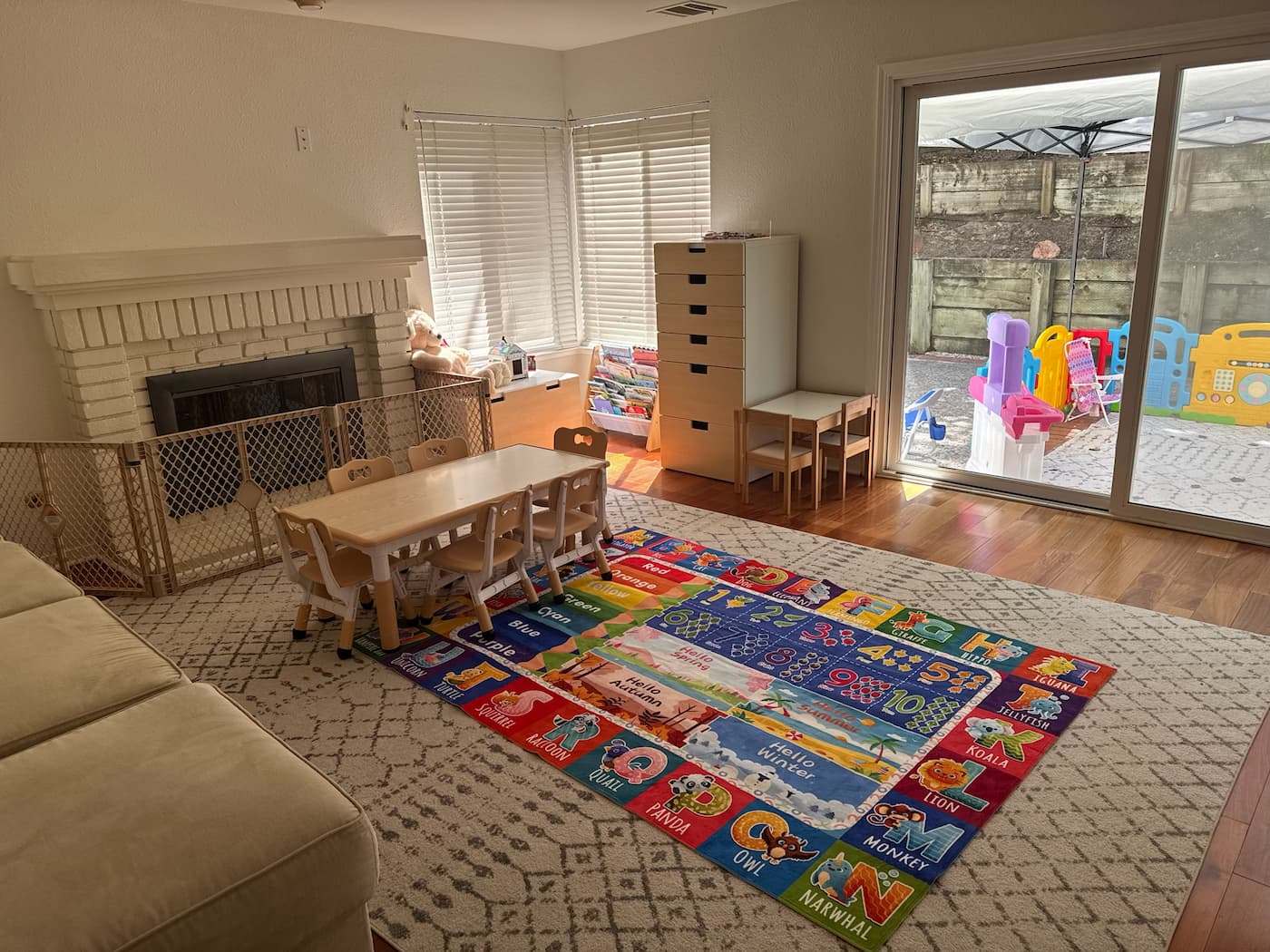
Play is not a break from learning. It is how young children learn. Dramatic play builds language and empathy. Building blocks teach spatial reasoning. Digging in the garden is science. Open exploration is where children apply, test, and own what they have been taught.
Children thrive on rhythm. Ours balances intentional curriculum with rest, outdoor time, and open play.
Warm greetings, settling in, breakfast brought from home, and morning routines.
Songs, calendar, weather, the day's theme, and a chance for every child to share.
Sensory play, art, early literacy, and fine-motor activities, rotated through the morning.
Fresh air, gross-motor movement, and a healthy snack outside.
Lunch from home, quiet music, and gentle preparation for rest.
Quiet rest period. Sleeping children sleep, others have quiet time with books.
Wake gently, snack, and ease back into the afternoon with calm activities.
Child-led exploration, outdoor time when possible, and warm goodbyes at pickup.
We don't teach to a test. We grow whole children, intentionally, across every domain of early childhood development.
We grow curious, capable thinkers, not just children who can recite letters and numbers.
In practice: Guided literacy and numeracy in morning curriculum. Problem-solving through hands-on materials. Science exploration through nature and garden. Open-ended questions that invite thinking.
A child who understands their own feelings and can navigate relationships has a foundation academics cannot replace.
In practice: Daily practice naming feelings. Conflict resolution supported by teachers, not resolved for children. Cooperative activities that require listening and sharing. Explicit vocabulary for feelings.
Bodies need as much development as minds, especially in the years when physical and cognitive milestones are deeply connected.
In practice: Daily outdoor play. Fine motor activities including art, sensory play, and practical tasks. Gross motor through movement games and garden work. Infant tummy time and milestone tracking.
Everything depends on language. We build vocabulary, listening, and storytelling before we ever think about reading.
In practice: Circle time with songs, stories, and discussion. Rich conversational interaction all day. Vocabulary woven into every activity. Books read aloud daily. Teachers who talk with children, not at them.
Creativity is not a talent some children have. It is a capacity all children have, and one that atrophies without room to breathe.
In practice: Open art experiences without predetermined outcomes. Music throughout the day. Dramatic play areas where children direct their own stories. Creative projects tied to curriculum themes.
Caring for infants is its own discipline. We honor it with very small ratios, deep individualization, and uncompromising safety practices.